The Governor
Historical television series about Sir George Gray
0 of 6 episodes
0% done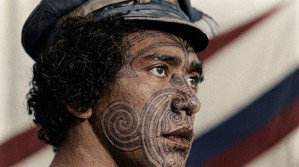
The first episode of landmark 1977 historical drama The Governor is a one and a half hour epic. Soon after signing the Treaty of Waitangi, charismatic Ngāpuhi chief Hōne Heke (George Henare) defies British forces, culminating in the battle at Ruapekapeka pā. Missionary Henry Williams tries to calm his old friend, but his influence is resented by the British. Change arrives with Governor George Grey —who undermines Williams, aggressively pursues 'peace' and captures fearsome Ngāti Toa chief Te Rauparaha, holding him without trial.
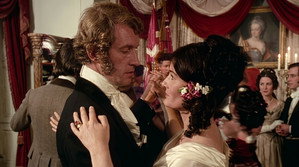
The second episode of Aotearoa's first blockbuster drama — in subject, budget and reception — focusses on Governor Grey and Lady Eliza's rocky and sometimes scandalous marriage. Their romance begins in Australia where Grey sustains an injury that spurs an opiate addiction. When tragedy strikes, grief takes different forms. Grey's star fades while he enjoys several affairs. Eliza (Judy Cleine) refuses to be humiliated and is punished unduly for a flirtation with an admiral (Ken Blackburn). Jazz singer Makuini Menehira plays Grey's mistress and adopted daughter. National Film Unit talent Hugh MacDonald directed this episode.
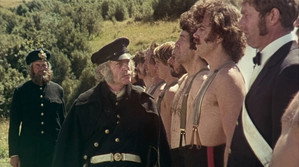
Like the previous episode of The Governor, this instalment opens across the ditch, with dogged explorer Edward Eyre (Jeremy Stephens) on an arduous walk across the central Australian desert. Much to Governor Grey's annoyance, Eyre is made his New Zealand Lieutenant and a showdown ensues; Eyre hungers for "real" work but Grey strands him in "earthquake ridden" Wellington to handle a fractious group of settlers agitating for representation. Janice Finn (who later produced fashion soap Gloss) plays Adelaide, Eyre's unsupportive fiancée. The episode is the second directed by National Film Unit veteran Hugh Macdonald.
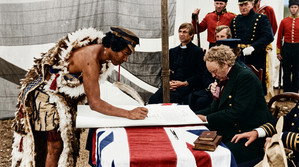
In The Governor's fourth episode, war looms in the Waikato as Māori iwi band together. Peacemaker and kingmaker Wiremu Tāmihana (Don Selwyn) agonises over the right course of action. This episode was a notable bicultural flagbearer in terms of drawing on Māori knowledge and oral history, and featuring extensive te reo. It follows key events from the early 1830s to 1863, leading to the investiture of the first Māori King. Discussions between historical figures like Te Wherowhero, Rewi Maniapoto and Te Heuheu are dramatised; motivations are revealed, and lines drawn.
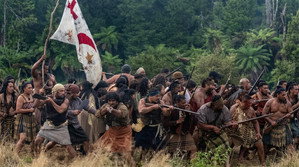
The Governor was a six-part TV epic that examined the life of Governor George Grey (Corin Redgrave). This episode arguably best lived up to the blockbuster scale and revisionist ambitions of the series. It depicts key battles of the 1863-64 Waikato Campaign — including Rewi’s last stand at Ōrākau, and the battle of Gate Pā in Tauranga. General Duncan Cameron (Martyn Sanderson) feels growing unease following Grey’s orders to evict Māori villagers, as he learns respect for his foe, and that Grey’s motives are driven not just by the urge to impose order on ‘the natives’ but by hunger for land.
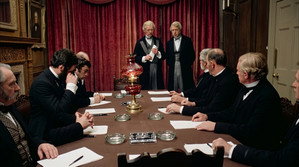
The final episode of The Governor offers a portrait of a once powerful man in fitful decline. An ageing Sir George Grey (Corin Redgrave) engineers a career comeback, but his 'radicalism' rubs Parliament up the wrong way while his obsession with his legacy isolates him. The story begins in Grey's mansion on Kawau Island, where the ex-Governor vents about New Zealand's direction. His political fortunes reignite but his inability to compromise seals his fate. Grey is also haunted by failed relationships and the many injustices suffered by Māori. Rewi Maniapoto (Wi Kuki Kaa) observes the "demon" in his old enemy's eyes.