
0 of 30 episodes0%

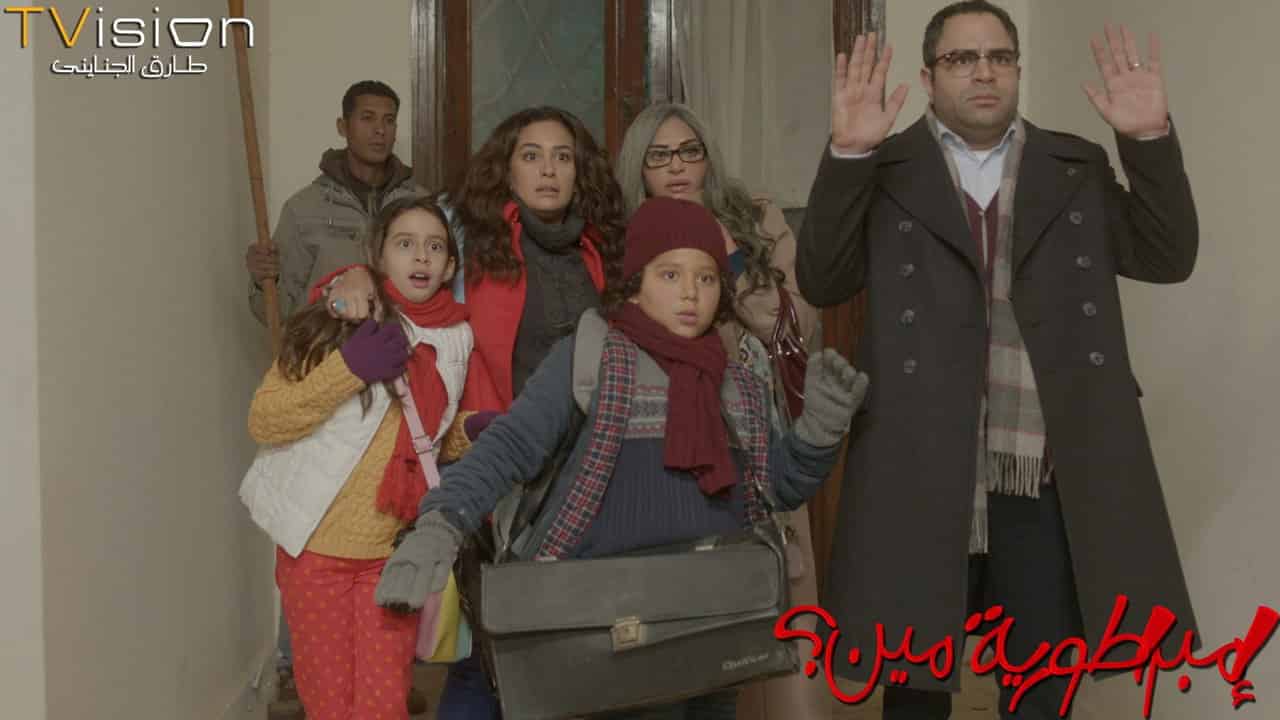
Following the January 25 Revolution, Amira decides to return to Egypt, driven by the optimistic belief that the country needs the help of all its children. A debate ensues among her family members—with some in favor and others opposed—before they ultimately decide to return, though Amira’s father chooses not to join them. Comic situations arise during the flight as Amira comes face-to-face with a chaotic reality.

Amira arrives at the airport and prepares to collect her luggage, but a comic clash ensues with an airport employee after some of her bags go missing. The story contrasts the way things are handled in Egypt versus abroad, and a series of humorous incidents unfolds involving the family and thieves; the situation takes a surprising turn when Amira’s car is targeted for theft, and she discovers—to her shock—that the very person she turns to for help (the head of the local "Popular Committee") is the thief attempting to steal the vehicle.

Amira’s quest to recover her lost luggage at the airport leads her to a working-class neighborhood, where a series of comic situations unfolds; the hosts of a wedding mistake her for the hired dancer, and she is forced to play the part in order to help a bride who is refusing to go through with the marriage.

The series continues to highlight the downsides of Egyptian society through a comedic lens; episodes address issues such as the difficulty of securing spots in public schools and the traffic crisis on the streets, while also contrasting child-rearing standards and customs in a European country with education and daily life in Egypt.

Amira decides to host a birthday party to get to know her neighbors, and the event unfolds with comedic situations involving them.

On the day of the referendum on constitutional amendments, Amira and her family head to the polls amidst the deep division gripping the Egyptian public; throughout the day—and while at the polling station—they encounter a series of ironic situations.

Amira keeps quiet about the Mother's Day celebration being held at her daughter Sarah's school, preferring not to tell her own mother, who does not believe in such celebrations. Later, Amira's family is abducted in broad daylight amidst a lack of security.

Amidst the country's dire economic situation, Amira and Sami attempt to find jobs; however, their search is fraught with obstacles and comic situations—to the point where Sami is driven to turn to his brother for help in securing employment for both himself and Amira.

Amira’s friends arrive from abroad to visit her and tour Egypt; however, amidst the prevailing atmosphere of suspicion and accusations of betrayal gripping many people in the country, Amira and Sami encounter numerous difficulties while helping their friends visit tourist sites.

While the Egyptian people were following the trial of former President Hosni Mubarak with bated breath, Amira and her family traveled to the countryside to offer condolences to their maid following the death of her grandmother; there, the family was taken aback by the immense suffering endured by the local residents.

Seeking to break the routine of online digital communication, Amira decides to take her family for an outing along the Nile Corniche in an attempt to bring them closer together; however, she encounters a number of peculiar behaviors during the excursion.

Amira and her family attempt to get close to a Christian family, but a series of peculiar incidents leads the latter to report them to the police out of suspicion.

Amira receives a warning from her daughter’s school principal, accusing the girl of violating school traditions and norms regarding modest dress; Amira then leaves the house accompanied by Carla, and both are shocked by the various attempts at harassment they encounter.

Amira decides to launch a meat boycott campaign to combat rising prices, but is surprised by a counter-campaign in which her husband, Sami, participates.

Amira decides to take her daughter and mother to the cinema at the same time the Port Said Stadium massacre is taking place, and they encounter a series of comic situations.

Amira decides to hold an open family meeting to clear the air, but the honesty is incomplete; Amira lies about looking for a job, while her daughter conceals the news of her expulsion from school.

Amira encounters a sick street child and takes him to a hospital, but they refuse to admit him; she then treats him at her home and decides to establish a charity dedicated to the care of street children.

Both Amira and Sami struggle to manage family affairs, as their children rebel and demand an election to choose someone fit to run the household.

Amira is overjoyed to land a job at the Egyptian Museum, but she is confronted with a vast number of historical inaccuracies in the course of her work.

Amira faces a series of comical situations because her manager favors a male colleague over her—simply because she is a woman.

Amira’s father decides to return to Egypt to work as a university professor and share the knowledge he gained abroad; however, he is shocked by the poor standards of Egyptian universities and their blind pursuit of profit.

Amira and her family are deeply disheartened after President Mohamed Morsi, the Muslim Brotherhood candidate, assumes power.

The episode addresses events following the Muslim Brotherhood's rise to power, focusing on the phenomenon of persistent power outages.

Zainab, who works for Amira, suffers a health crisis requiring her transfer to the hospital; however, they struggle throughout the journey against severe traffic congestion on the capital's streets.

The episode addresses events following the Muslim Brotherhood's rise to power, focusing on the phenomenon of persistent power outages.

Amira decides to attend a taping of the show *Al-Bernameg?*, but discovers she has to wait for hours to get fuel for her car.

Mansour decides to propose to a young woman and goes with Amira's family, but the attempt fails due to differences in political views.

Amira meets a group of new friends, while Rami and Carla try to get closer to her and her family; however, various comic situations and ironies arise due to their differing points of view.

Amira is accused of treason and collaboration and placed under surveillance after seeking financial assistance from her father, who lives abroad, while Rami is arrested on charges of forgery.

Amira and Sami are arrested on charges of treason, and Rami is arrested for forgery, after being reported by Mansour, the driver who works as an undercover informant.